
As global livestock production continues to expand, feed manufacturers are under increasing pressure to improve efficiency, reduce costs, and respond quickly to changing market demands. Traditional feed factories designed for only one type of product are gradually giving way to flexible systems that can adapt to different formulas, capacities, and raw materials.
Modern feed processing technology has transformed how producers manage poultry, fish, and livestock nutrition. Instead of relying on outdated manual operations, many companies are investing in automated solutions capable of producing multiple feed varieties with consistent quality.
Among these investments, the poultry feed production line has become one of the most attractive options for medium and large feed manufacturers.
Rising Demand for High-Quality Poultry Feed
Poultry meat remains one of the fastest-growing protein sources worldwide. Broiler chickens, laying hens, ducks, and geese all require scientifically balanced feed formulations to maximize productivity.
The growth of commercial farming has increased demand for:
- Starter feed
- Grower feed
- Finisher feed
- Layer feed
- Breeder feed
Feed quality directly affects growth rates and feed conversion efficiency. As a result, feed manufacturers need stable production systems capable of maintaining pellet quality and nutritional consistency.
Modern processing equipment allows producers to control grinding size, mixing uniformity, conditioning temperature, and pellet density.
Why Flexible Design Matters
A modern feed mill should not be limited to a single product. Market demand changes constantly. A factory producing only broiler feed today may need to manufacture layer feed tomorrow.
Flexible production offers several advantages:
Lower Investment Risk
Manufacturers can serve different customers without purchasing separate systems.
Greater Capacity Utilization
Equipment remains productive throughout the year.
Better Market Opportunities
Factories can expand into new sectors more easily.
Easier Upgrading
Modular designs allow future expansion.
This is why many investors prefer a complete poultry feed production line rather than individual machines.
Main Processing Steps
Raw Material Receiving
Corn, soybean meal, wheat bran, rice bran, vitamins, and minerals are stored separately.
Grinding
A hammer mill reduces particle size and improves digestibility.
Mixing
Uniform mixing ensures nutritional consistency.
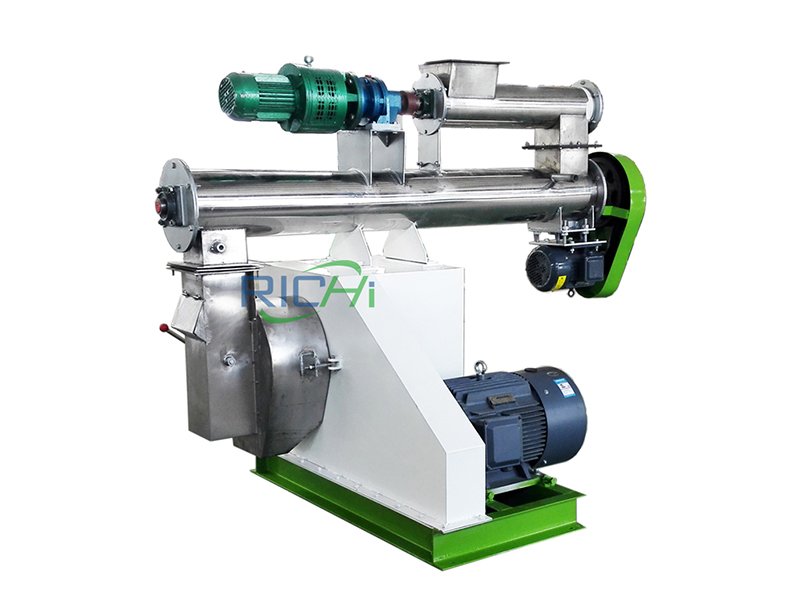
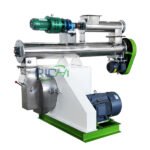
Pelleting
Steam conditioning improves starch gelatinization and pellet strength.
Cooling
Fresh pellets are cooled to remove moisture.
Screening
Broken particles and dust are removed.
Packing
Finished feed is weighed and packed automatically.
Automation Brings New Possibilities
Automatic control systems help operators monitor:
- Temperature
- Current load
- Feed flow
- Pellet quality
- Production output
Automation reduces labor costs and minimizes operational errors.
Remote monitoring systems are becoming increasingly popular among large feed companies.
Can Poultry and Fish Feed Be Produced Together?
Many customers ask whether one factory can process both poultry and fish feed.
The answer depends on production requirements.
Fish feed usually requires extrusion technology, while poultry feed relies on pelleting systems. However, with proper engineering design, manufacturers can establish integrated facilities.
For example, adding an automatic fish feed pellet making machine allows producers to diversify into aquaculture markets without constructing another factory.
This approach increases profitability and reduces investment risks.
Raw Materials Suitable for Feed Production
Common ingredients include:
- Corn
- Soybean meal
- Wheat bran
- Rice bran
- Fish meal
- Cottonseed meal
- Sunflower meal
- Vitamins
- Premixes
- Limestone powder
Different formulations can be adjusted according to species and growth stages.
Energy Efficiency Has Become Essential
Electricity costs account for a large portion of production expenses.
Modern machines are designed to:
- Reduce power consumption.
- Improve pellet yield.
- Minimize raw material waste.
- Increase operating stability.
Variable frequency drives further optimize energy usage.
These improvements significantly lower production costs over time.
Choosing Reliable Equipment Suppliers
Many buyers focus only on machine prices.
However, successful projects require attention to:
- Equipment quality
- Installation support
- Spare parts supply
- Engineering experience
- After-sales service
Selecting experienced manufacturers can reduce future maintenance costs and shorten commissioning time.
Companies with extensive project experience often provide turnkey solutions.
Among industry suppliers, Richi Pellet Mill has accumulated experience in customized feed processing systems across different countries and capacities.
How Capacity Selection Impacts Investment
Small projects:
1–2 T/H
Suitable for family farms and local markets.
Medium projects:
3–10 T/H
Ideal for commercial feed companies.
Large projects:
10–40 T/H
Designed for industrial feed production.
Capacity selection should depend on:
- Market demand
- Budget
- Raw material supply
- Available labor
- Future expansion plans
Starting with a smaller system often provides faster returns.
Common Mistakes New Investors Make
Ignoring Raw Material Costs
Raw materials represent most production expenses.
Buying Cheap Equipment
Low-quality machines lead to downtime.
Overestimating Capacity
Excessive investment delays returns.
Lack of Technical Support
Professional engineering assistance is essential.
Sustainability Is Shaping the Industry
Environmental regulations are becoming stricter worldwide.
Manufacturers are adopting:
- Dust collection systems
- Energy-saving motors
- Automatic lubrication systems
- Intelligent control systems
Sustainable production helps companies remain competitive.
Future Trends
Feed production is entering the era of smart manufacturing.
Emerging technologies include:
- AI monitoring
- Remote diagnostics
- Cloud data analysis
- Predictive maintenance
Factories built today should be prepared for future upgrades.
Final Thoughts
Demand for high-quality animal protein continues to grow. Efficient feed processing systems are becoming increasingly important for farmers and feed manufacturers worldwide.
Whether producing poultry feed or expanding into aquaculture, investing in a flexible system provides long-term advantages. A modern <strong>poultry feed production line</strong> combined with advanced automation can significantly improve efficiency and profitability.
If you are exploring feed manufacturing technologies or evaluating project opportunities, check my source for additional information and practical guidance before making investment decisions.