

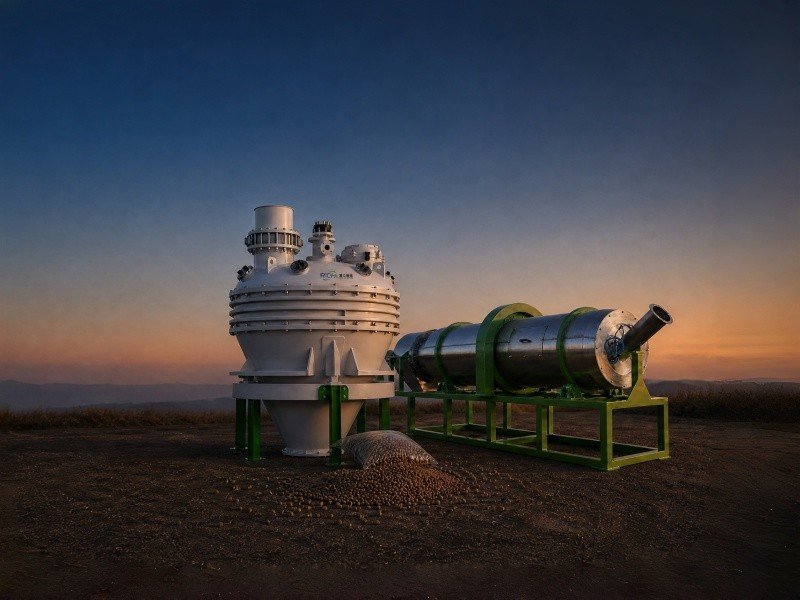
Liquid Application Is Becoming a Key Part of Feed Processing
Fish feed production is no longer limited to grinding raw materials and forming pellets. As formulations become more specialized, manufacturers increasingly need accurate systems for handling oils, fats and other liquid ingredients.
An oil sprayer machine provides a practical way to introduce these ingredients into a controlled production process. However, the right equipment depends on much more than the name of the machine.
The feed type, production capacity, pellet size, oil viscosity and desired application method all influence the final configuration.
For a new aquatic feed factory, understanding these factors before purchasing equipment can prevent many common problems.
Why Are Liquid Ingredients Important?
Liquid ingredients can perform several functions in feed manufacturing.
Oil may contribute energy to the formula, improve palatability or provide specific nutritional components. In some formulations, liquid ingredients can also influence the physical characteristics of the finished pellets.
For aquatic feed, the challenge becomes more complicated because pellets must perform properly in water.
Floating fish feed, for example, must maintain sufficient buoyancy. Shrimp feed may require different water stability and sinking characteristics. Therefore, the amount and method of liquid application should be evaluated together with the entire formulation.
Adding more liquid does not automatically produce a better product.
The objective is controlled and repeatable application.
What Is the Difference Between Mixing and Spraying?
Mixing and spraying are related but not identical processes.
A mixer is mainly designed to distribute ingredients throughout a batch. A spraying system is designed to apply a liquid in a controlled manner to a moving material stream or mixing environment.
This distinction becomes important when the factory wants to add oil after pellet formation.
Post-pellet application can allow manufacturers to adjust the final product without putting excessive liquid into the pelletizing stage.
For certain formulas, this can make the production process more flexible.
When Is Post-Pellet Oil Application Useful?
There are several situations where post-pellet spraying can be considered.
One is when the formulation requires additional oil that could interfere with pellet formation if introduced too early.
Another is when the manufacturer wants to control surface coating independently from the core formulation.
A third situation occurs when a factory produces multiple products with different liquid requirements.
Instead of changing the entire upstream formulation, controlled post-pellet application can provide another adjustment point.
The actual process should always be validated against the specific feed formulation.
Choosing Between Different Spraying Methods
Not every oil application system operates in the same way.
A drum system creates continuous rolling movement. As pellets move through the chamber, the spraying system applies liquid while the material is gently redistributed.
A paddle-type configuration generates more active mixing. This can be useful where strong contact between liquid and pellets is required.
Vacuum coating introduces another approach by using pressure differences to improve liquid penetration.
Each technology has a different operating principle.
Rather than asking which technology is universally better, buyers should consider what their pellets need.
What Does Capacity Really Mean?
A production capacity such as 0.5 T/H, 2 T/H or 10 T/H describes material throughput, but it does not by itself determine liquid application performance.
The actual liquid flow rate also matters.
For example, two factories may each process 5 T/H of pellets but require different oil addition rates. Their pumps, tanks and control systems may therefore need different specifications.
Capacity should be evaluated as a complete system:
Pellet throughput + liquid dosage + liquid characteristics + application method
This approach gives a more realistic picture of equipment requirements.
Why Fish Feed Production Requires More Attention to Process Stability
Aquatic feed production often involves relatively small pellet diameters and specialized formulations.
Small changes in moisture, temperature and liquid addition can affect the physical behavior of the product.
This is one reason complete aquatic feed projects are often designed around a coordinated sequence rather than isolated machines.
Grinding affects particle size.
Mixing affects ingredient distribution.
Conditioning affects moisture and temperature.
Pelletizing determines pellet formation.
Cooling stabilizes the product.
Spraying can modify surface characteristics or introduce additional liquid ingredients.
Every stage influences the next.
How Does an Oil Sprayer Connect With a Production Line?
A typical aquatic feed process may include:
Raw material receiving → cleaning → grinding → batching → mixing → conditioning → extrusion or pelletizing → drying/cooling → liquid application → screening → packing.
Not every fish feed plant uses the same sequence.
Floating feed often involves extrusion technology, while other aquatic feed products may use conventional pelletizing processes.
Therefore, the spraying system should be selected after the production route has been determined.
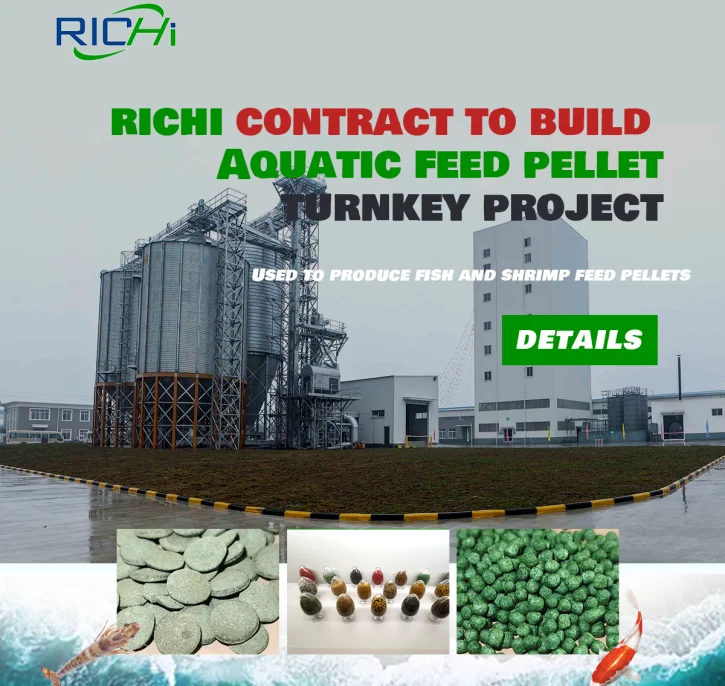
This is particularly important for investors purchasing an entire 0.2-20 T/H aquatic feed pellet plant solution rather than a standalone machine.
What Should Be Considered for Small Feed Plants?
Small factories have different priorities from large industrial plants.
For a smaller operation, the equipment should be easy to operate, simple to maintain and matched closely to the actual output.
Oversized tanks, pumps and conveyors can increase unnecessary investment and make low-load operation more difficult.
A compact system with appropriate control can often be more practical.
However, small capacity does not mean that liquid application accuracy is unimportant.
Even a small feed producer needs consistent product quality if the finished feed is sold commercially.
What Changes in a Large Industrial Plant?
At larger capacities, process continuity becomes more important.
The liquid storage system may need greater volume, while pumps and pipelines must support continuous operation.
Automatic flow control becomes more valuable because operators cannot reasonably make constant manual adjustments at high throughput.
Large plants may also require several production recipes and automatic parameter management.
The equipment therefore becomes part of the plant’s broader automation system.
Can One System Handle Different Oils?
Potentially, but the answer depends on the liquid characteristics and system design.
Different oils can vary in viscosity, temperature requirements and handling behavior.
If a factory changes between materials frequently, the storage tank, pipeline cleaning procedure and spraying components should be considered carefully.
Cross-contamination is another issue when several formulations are produced on the same line.
A flexible system should therefore be designed around actual production schedules rather than theoretical versatility.
Why Liquid Storage Matters
The spraying chamber receives most of the attention, but liquid storage is equally important.
The storage tank should provide enough working volume without becoming unnecessarily large.
Tank material, insulation, heating, level monitoring and cleaning requirements may also need to be considered.
For some oils, maintaining a suitable temperature can improve pumping and spraying performance.
This is why a complete liquid system can include:
- Storage tank
- Heating unit
- Pump
- Filter
- Flow meter
- Pipeline
- Nozzles
- Control cabinet
The exact configuration depends on the project.
How Can Manufacturers Improve Production Consistency?
Consistency begins with stable input conditions.
Pellets should enter the spraying system at a relatively controlled temperature and flow rate.
The liquid supply should also remain stable.
If pellet throughput changes significantly but the oil pump continues operating at the same rate, the actual dosage will change.
Automatic coordination between material throughput and liquid flow can reduce this problem.
For factories producing multiple recipes, programmable controls can further simplify operation.
What Questions Should Buyers Send to a Supplier?
A useful equipment inquiry should contain more than “Please send price.”
Buyers can provide:
Product: floating fish feed, shrimp feed, sinking feed or another product
Capacity: expected hourly production
Pellet size: target diameter
Liquid: oil, fat or other liquid material
Dosage: approximate percentage
Temperature: expected liquid and pellet temperature
Production mode: continuous or batch
Existing equipment: machines already installed
These details allow a supplier to propose a much more relevant configuration.
From Standalone Equipment to Complete Production Solutions
An oil application system may look like a small part of a feed factory, but it can affect the final product considerably.
For investors developing a complete aquatic feed project, it makes sense to plan liquid handling together with grinding, mixing, extrusion or pelletizing, drying, cooling and packaging.
A complete engineering approach can also make future capacity expansion easier.
For pellet mill manufacturers researching different plant configurations, look at this website can serve as a supplementary source for comparing related feed-processing technologies and equipment concepts.
A More Practical Way to Select Equipment
The most useful selection method is to work backward from the finished product.
Start with the required pellet characteristics.
Then determine the formulation.
Next identify how much liquid needs to be added and at which stage.
After that, calculate the required throughput.
Only then should the spraying technology and supporting equipment be selected.
This approach avoids purchasing a machine simply because its nominal capacity looks attractive.
The final goal is not to own a larger machine. It is to create a stable production process that delivers the required product characteristics.