
Every year, after the combines leave the field, a massive amount of material remains. Corn stalks, leaves, and cobs sit in rows across millions of hectares. Some of it gets grazed. Some gets plowed back. A large share is simply burned. Very little of it is treated as a resource, even though it contains energy, fiber, and nutrients that have real value.
The way farmers handle corn stalks after harvest is not just a waste management question. It affects soil health, air quality, farm income, and rural energy supply. In regions where residue burning is common, the smoke causes respiratory problems and contributes to seasonal air pollution. In regions where residue is removed carelessly, soil organic matter declines and erosion increases. Getting the balance right is harder than it looks.
This is the context in which corn stalk processing, and pelleting in particular, makes sense. A corn stalk pelletizer turns a low-density residue into a dense, storable, transportable product. But the decision to process stalks is not only a technical one. It is a farm management decision that touches soil, labor, equipment, and markets.
This article looks at corn stalks as a resource rather than a waste product. It covers why residue management matters, what options farmers have, how pelleting fits in, and what a small-to-mid-scale operation actually looks like in practice.
Why Residue Management Matters More Than It Used To
For most of agricultural history, crop residue was either burned or plowed back. Both practices had logic. Burning cleared fields quickly and returned some nutrients as ash. Plowing incorporated organic matter into the soil. Neither was seen as a problem.
That view has changed. Research over the past few decades has shown that residue removal has limits. Soil needs organic matter to hold water, support microbial life, and resist erosion. In dry regions, removing too much residue leaves soil exposed to wind. In wet regions, it increases runoff and nutrient loss.
Burning has its own problems. It releases particulate matter and greenhouse gases. It destroys soil microbes near the surface. It also wastes the energy and fiber content of the residue.
At the same time, pressure to find alternative energy sources has grown. Biomass is one of the few renewable options that can be stored and used on demand. Agricultural residues are one of the most abundant biomass sources available. That has created interest in using corn stalks for fuel, bedding, and other products.
The tension between soil protection and residue use is real. The practical answer is usually partial removal. Take some residue for energy or other uses, leave enough to protect the soil. How much can be removed depends on soil type, climate, crop rotation, and tillage practice.
Options for Handling Corn Stalks
Farmers have several options for managing corn stalks after harvest. Each has trade-offs.
Leaving residue in the field is the simplest option. It protects soil, adds organic matter over time, and requires no extra labor. The downside is that it can interfere with the next planting season, especially in no-till systems where residue buildup can be heavy.
Grazing is common in mixed farming operations. Livestock consume some of the residue, and their manure returns nutrients to the field. The downside is that grazing compacts soil in wet conditions and may not be practical in all systems.
Baling and removal takes residue off the field for use as feed, bedding, or fuel. This generates income or saves cost, but it also removes organic matter and nutrients. The net effect depends on how much is removed and what replaces it.
Burning is fast and cheap but has environmental and health costs. Many regions have restricted or banned burning for this reason.
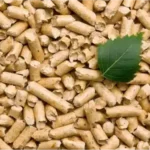
Pelleting converts residue into a dense fuel or bedding product. It adds value but requires equipment, labor, and a market. It is most attractive when residue is abundant, local demand exists, and the farm wants to diversify income.
Where Pelleting Fits
Pelleting is not the right answer for every farm. It makes sense under specific conditions.
The first condition is residue supply. A farm needs enough corn stalks to justify the equipment and the labor. A small farm with limited acreage may not have enough material to run a pelletizer regularly.
The second condition is moisture. Corn stalks have to be dried before pelleting. In humid regions, this requires drying equipment or long field drying periods. In dry regions, it may be as simple as leaving bales under cover.
The third condition is equipment access. Pelleting requires a grinder, a pelletizer, a cooler, and storage. For small operations, this can be a significant investment. Shared ownership or cooperative arrangements can reduce the burden.
The fourth condition is market or on-farm use. Pellets can be sold as fuel, used as bedding, or burned on-site for heat. Without a use, there is no reason to produce them.
The fifth condition is labor. Pelleting is not a one-person job at scale. It requires operators, maintenance, and material handling. Farms that are already short on labor may find the workload difficult.
For farms that meet these conditions, pelleting offers a way to turn a residue into a product. It also fits into a broader trend of on-farm diversification, where farms generate income from multiple sources rather than relying on a single crop or product.
Small-Scale Pelleting in Practice
A small-scale corn stalk pelleting operation typically processes one to two tons per hour. This is large enough to be meaningful but small enough to be managed by a farm or small cooperative.
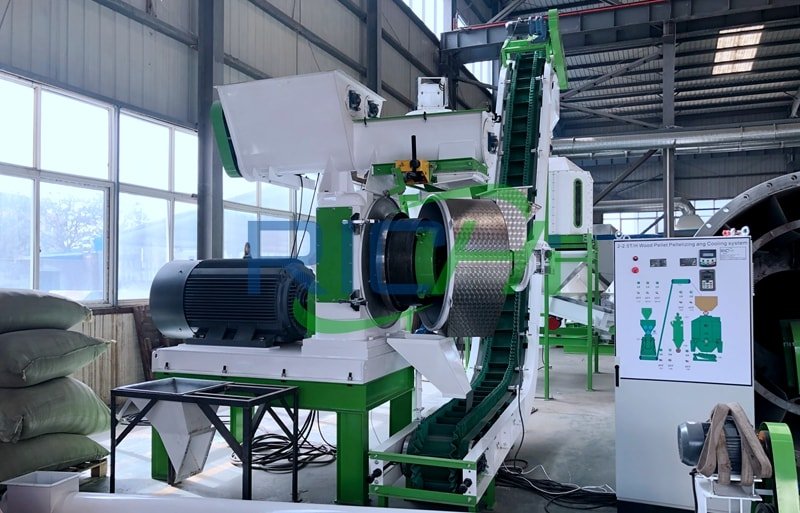
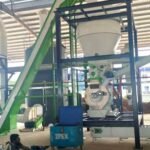
A 1-2 t/h corn stalk waste pellet machine for agricultural waste recycling line usually includes several stages.
Collection and baling come first. Stalks are gathered after harvest and baled for storage. Bale density affects transport and handling cost.
Storage is next. Bales are kept dry, either under cover or in well-drained stacks. Moisture control during storage is critical because wet stalks do not pellet well and may mold.
Grinding follows. A hammer mill reduces stalks to a consistent particle size. The grinding step consumes energy and wears hammers, but it is necessary for good pellet quality.
Drying may be required. If moisture is above the target range, a dryer is used. Small operations may use simple drying methods, while larger ones use rotary dryers.
Pelleting is the core step. The pelletizer presses ground material through a die to form pellets. Die selection matters, because corn stalks are abrasive and require a die that balances durability against wear.
Cooling follows. Fresh pellets are hot and moist. They must be cooled before storage or bagging.
Screening and bagging complete the line. Fines are separated and recycled. Finished pellets are bagged or stored in bulk.
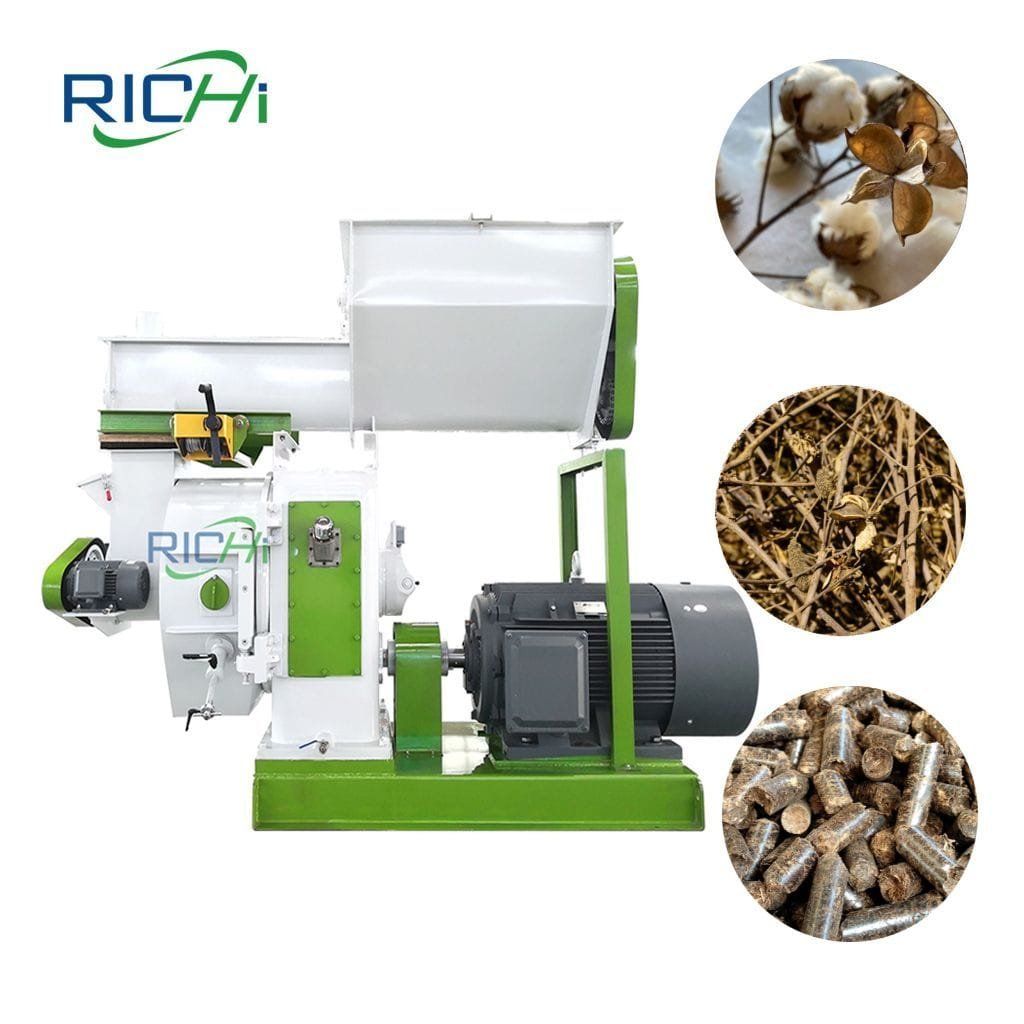
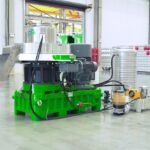
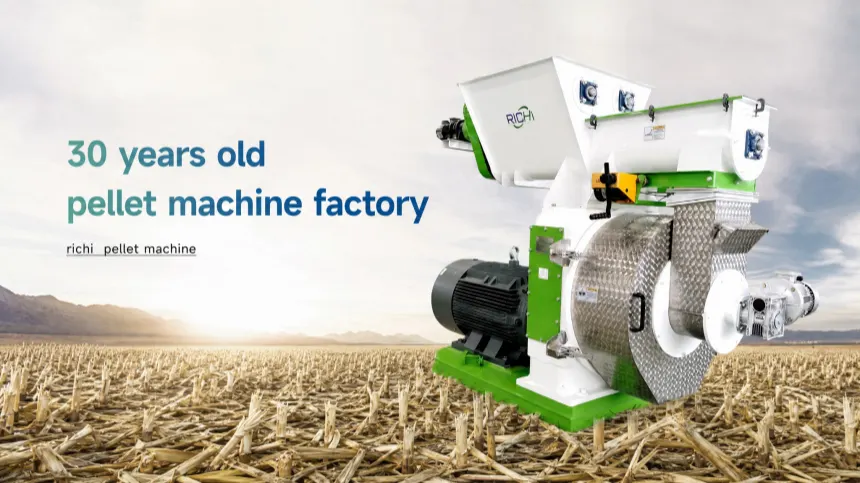
For farms that want to evaluate equipment options, a corn stalk pelletizer is available in a range of sizes and configurations. Matching the machine to the available feedstock, moisture conditions, and intended use is the key decision.
pellet mill machine is a broad category that covers equipment for feed, biomass, and other applications. For projects that need a complete line rather than a single unit, reviewing the supplier’s range and support arrangements is a practical step before committing.
The Economics at Small Scale
Small-scale pelleting has different economics than industrial production. The goal is usually not to compete with large suppliers on price, but to capture value that would otherwise be lost.
On-farm use is one source of value. If a farm uses pellets for heating, bedding, or other purposes, it avoids the cost of buying those products elsewhere. That saving can justify the investment even if the pellets are not sold.
Local sales are another. In some regions, there is demand for biomass pellets from households, greenhouses, or small businesses. Selling locally avoids transport costs and market risk.
Waste reduction is a third. Residue that would otherwise be burned or left to decay is converted into a useful product. That has environmental value as well as economic value.
The costs are real. Equipment, power, labor, and maintenance all add up. Small operations have less ability to spread fixed costs than large ones. That means the per-ton cost of pellets is often higher at small scale.
Whether the economics work depends on local conditions. In regions with cheap residue, high fuel prices, and available labor, small-scale pelleting can be viable. In regions with cheap coal or abundant wood, it may not be.
Environmental and Soil Considerations
Pelleting corn stalks does not eliminate the need to think about soil health. Removing residue has consequences, and those consequences have to be managed.
The first consideration is removal rate. Not all residue should be removed. Enough has to remain to protect the soil and maintain organic matter. The right rate depends on soil type, climate, and farming practice.
The second consideration is nutrient replacement. Residue contains nutrients, especially potassium. Removing residue removes those nutrients. Over time, this may require additional fertilizer to maintain yields.
The third consideration is erosion. Bare soil erodes faster than soil covered with residue. In windy or hilly regions, leaving residue on the field may be more valuable than removing it.
The fourth consideration is carbon. Soil carbon is important for soil health and for climate. Removing residue reduces carbon inputs. Whether this matters depends on the broader farming system.
A responsible pelleting operation accounts for these factors. It does not treat residue as free. It treats it as a resource with limits.
Practical Steps for Getting Started
For farmers considering corn stalk pelleting, a few practical steps help.
Start with a feedstock assessment. How much residue is available? What is its moisture content? How is it currently managed? What would it cost to collect and store?
Next, assess the market or use. Is there demand for pellets locally? Can they be used on-farm? What price would make the project viable?
Then, assess equipment needs. What capacity is required? What power is available? What storage is needed? What support is available from suppliers?
Finally, assess the economics honestly. Include all costs, not just the machine. Include labor, maintenance, power, storage, and working capital. Compare the result to the value of the pellets.
Projects that go through these steps are more likely to succeed than those that start with a machine and work backward.
Common Mistakes
Several mistakes appear repeatedly when farms adopt pelleting.
Underestimating moisture is the most common. Corn stalks are often wetter than expected. Drying capacity is often inadequate.
Ignoring die wear is another. Corn stalks are abrasive. Dies wear faster than in feed applications. Budgets that assume feed-level die life are unrealistic.
Underestimating labor is a third. Pelleting is more labor-intensive than it looks, especially at small scale where automation is limited.
Skipping market research is a fourth. Producing pellets is not the same as selling them. Farms that do not identify a use end up with inventory they cannot move.
Removing too much residue is a fifth. Soil health matters. Farms that remove residue without considering soil needs may see yields decline over time.
What a Balanced Approach Looks Like
A balanced approach to corn stalk pelleting recognizes that residue has multiple values. It can protect soil, feed livestock, generate energy, or produce income. The right mix depends on the farm.
Pelleting is one option among several. It makes sense when residue is abundant, moisture can be managed, equipment is available, and there is a market or on-farm use. It makes less sense when residue is needed for soil, when moisture is too high, or when the market is uncertain.
Farms that treat residue as a resource, rather than a waste product, tend to make better decisions. They think about the whole system, not just the machine. They plan for storage, drying, and maintenance. They identify a use before they produce. And they accept that some residue should stay in the field.
Looking Ahead
Interest in agricultural residue processing is growing. Energy costs, environmental concerns, and the search for new farm income all drive it. Corn stalks are one of the most abundant residues available, and pelleting offers a way to turn them into a product.
The technology is established. The equipment is available. What separates successful projects from unsuccessful ones is planning. Feedstock, moisture, equipment, labor, and market all have to be addressed before the first pellet is made.
For farms willing to do that work, corn stalk pelleting can be a practical addition to an agricultural operation. For those who skip the planning, the machine will sit idle while the residue keeps piling up.