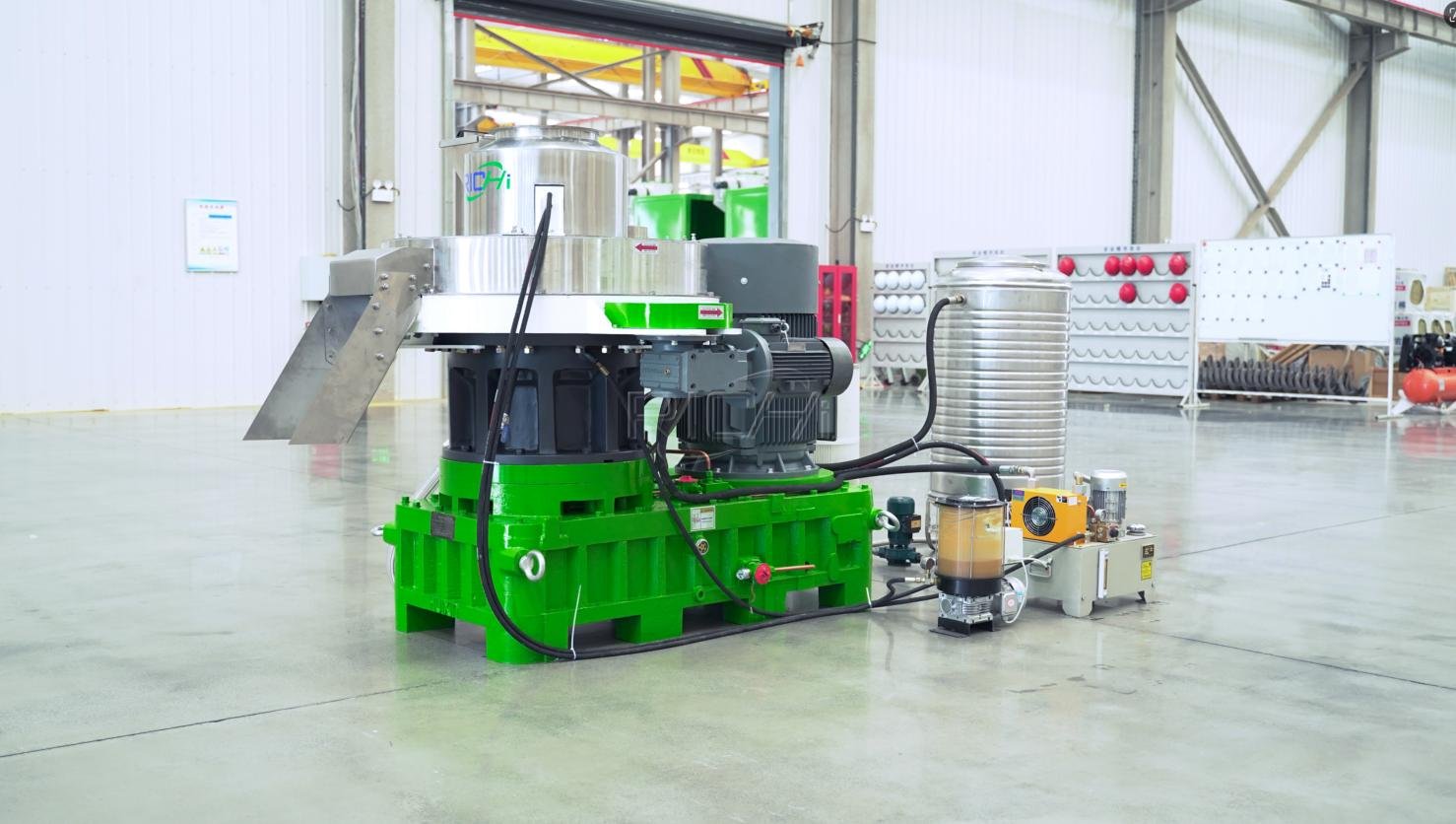

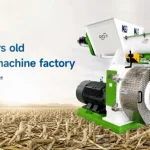

Buying a hemp pellet mill requires more than matching a machine’s rated capacity to the tonnes of residue available. Hemp stalks, hurds and other plant fractions can differ in fibre length, bulk density, moisture, ash, contamination and particle structure. Those differences affect preparation, feeding, compression, pellet durability and wear. A procurement decision should therefore be based on a defined feedstock and product specification, supported by evidence from the supplier.
The buyer’s task is to test whether the proposed machine and upstream process can handle the actual hemp material, not whether the supplier can provide a pellet mill in the requested capacity class. A disciplined supplier review helps expose gaps in material preparation, capacity assumptions, wear protection, service and acceptance testing before the purchase order is issued.
Write a feedstock specification that reflects the supply chain
Identify the hemp fraction to be pelletized. Whole stalks, chopped stalks, hurd-rich material and mixed residues should not be treated as interchangeable. Record moisture range, particle size, bulk density, ash, soil or stone contamination and seasonal variation. If the plant will receive material from multiple farms or processors, obtain samples from more than one source and describe the expected range.
Storage and transport can change the material before it reaches the mill. Outdoor storage may introduce moisture variation or soil contamination. Long fibres may tangle during conveying or bridge in bins. A supplier should be given the material condition at the point of machine feeding, not only a description of the crop as harvested. If chopping, drying or grinding will occur upstream, state which equipment is included in the project.
Check the complete preparation route
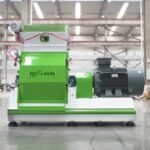
Hemp residues may need size reduction before pelleting. The chopping and grinding stages should produce a particle size suitable for stable feeding and compression. Ask for the target particle-size distribution and the screen arrangement proposed for the grinder. Confirm how the equipment handles long fibres, tramp material and dust. If the feedstock is wet, establish whether drying is required and calculate the water-removal duty from measured moisture.
Drying should be evaluated as part of the process economics. It requires a heat source, fuel handling, exhaust, dust collection and additional maintenance. Compare the cost of drying with the cost and feasibility of sourcing material at a lower moisture level. If different hemp fractions have different moisture and density, they may need separate preparation or blending controls before entering the pellet mill.
Dry fibrous biomass can generate dust during grinding, transfer and screening. Identify dust collection points, inspection access and safe disposal or return of collected material. The owner and equipment supplier should clarify which party designs and installs the relevant fire and explosion-risk controls under local regulations. Do not assume that a dust collector or general-purpose fan automatically addresses every site-specific hazard.
Demand evidence for the stated capacity
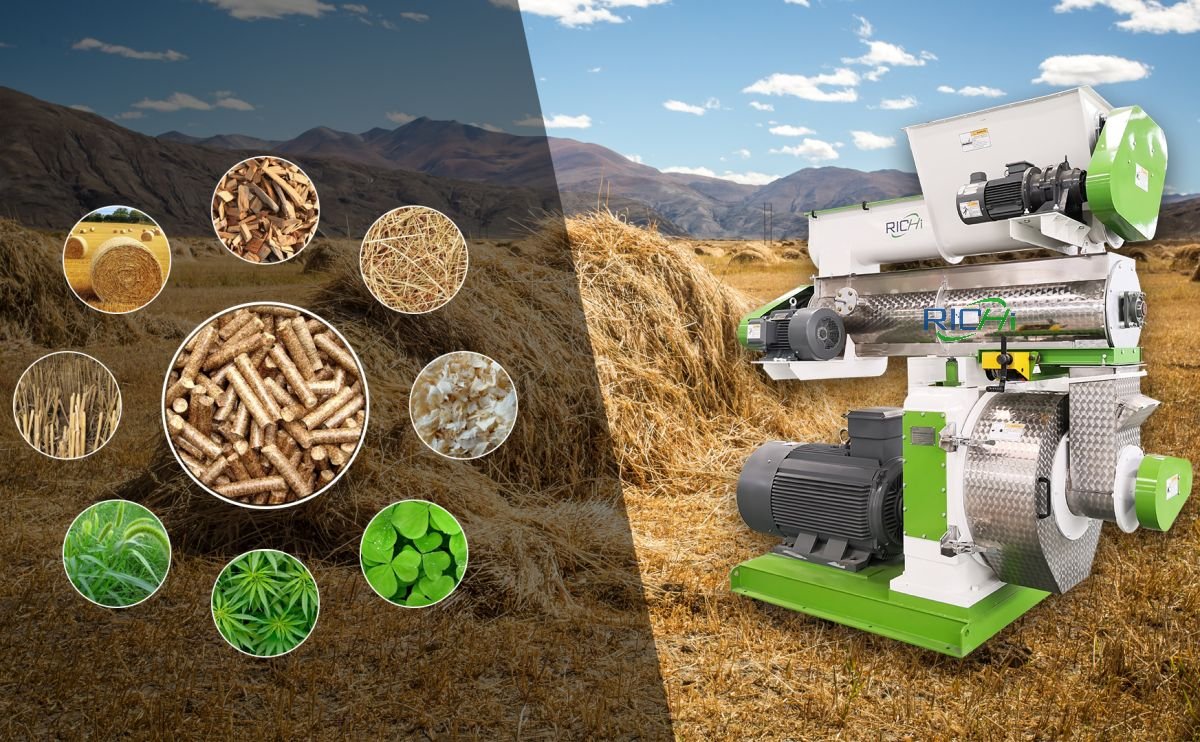
Ask whether the capacity is a machine rating, a line rating or a result from a specific material test. Request the test feedstock description, moisture, particle size, pellet diameter, operating duration and measurement method. A short trial using prepared material may not represent the output of a plant receiving variable residues. The supplier should explain which upstream conditions are necessary to achieve the stated capacity.
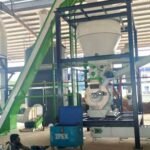
Review the whole line for bottlenecks. The grinder must supply the pellet mill, and the cooler, screen and packing equipment must accept its discharge. Conveyors, bins and dust collection can also limit throughput. If the buyer plans to increase capacity later, ask which parts can be expanded and whether the electrical supply, building and storage have enough reserve.
Evaluate die, roller and wear protection
Fibrous and potentially abrasive biomass can create wear at several points in the process. Ask the supplier to identify the components exposed to abrasion and the materials or design features used to manage it. For the pellet mill, review die specification, roller construction, bearing protection and the replacement procedure. For grinders, review hammers, screens and liners. For conveyors, inspect transfer chutes, chains, belts and other high-wear areas.
Do not accept a general claim of long service life without knowing the operating basis. Ask for inspection intervals, wear measurement methods and replacement criteria. The useful comparison is the expected maintenance burden under the buyer’s hemp feedstock and operating hours. If the supplier cannot state the assumptions behind its estimate, treat the estimate as unverified rather than as a guaranteed component life.
Supplier audit checklist
| Audit topic | Questions for the supplier | Evidence to request |
|---|---|---|
| Material suitability | Which hemp fraction and moisture range are covered? | Feedstock specification and test records |
| Preparation | What chopping, grinding or drying is required? | Process flow and equipment list |
| Capacity | What conditions support the stated output? | Test basis and line bottleneck review |
| Wear | Which parts wear first and how are they replaced? | Material details and maintenance schedule |
| Utilities | What electrical and thermal loads are required? | Motor list and utility estimates |
| Service | Which parts are stocked and what are their lead times? | Spare-parts list and support procedure |
| Acceptance | How will stable output and pellet quality be measured? | Written trial and acceptance protocol |
Compare total ownership cost, not only the machine price
Include electricity, fuel, labour, wear parts, maintenance, dust handling and downtime in the comparison. A machine with a lower purchase price may require more frequent screen or die replacement. A system with higher automation may reduce manual handling but require more specialized service. The correct option depends on local energy costs, labour availability, operating hours and the reliability of the raw-material supply.
Calculate operating cost per tonne of saleable pellets. Use actual or supplier-supported energy estimates, expected maintenance costs and the quantity of product that meets the buyer’s specification. If fines or off-spec pellets are recycled, clarify how that affects throughput and energy consumption. Do not assume that all material entering the pellet mill becomes saleable product.
Inspect maintainability and service access
Review the equipment layout for access to die chambers, screens, bearings, motors, lubrication points and inspection doors. Confirm the clearance required to remove a die or motor and the lifting equipment needed. Dust and fibre accumulation can make cleaning difficult, so ask how the machine is inspected and cleaned safely. Maintenance access should be shown on the layout drawing, not left to the installation team to resolve after delivery.
Ask for a recommended initial spare-parts stock based on the expected operating hours. Identify standard items that can be purchased locally and proprietary components that require advance ordering. Confirm part numbers, warranty conditions and the process for technical support. If the site is remote, consider whether the owner can perform routine service or will depend on visiting technicians for common maintenance tasks.
Set acceptance criteria before the order
Agree the test material, moisture range, particle size, pellet diameter, target output, trial duration and sampling method before manufacturing. Define how pellet durability, fines, dimensions and product moisture will be measured. If the test uses a prepared feedstock that differs from the buyer’s normal supply, document the difference and do not treat the result as proof of performance on the unprepared material.
For an integrated line, acceptance should consider sustained system output rather than the pellet mill in isolation. Record interruptions, feed-rate changes, motor current, energy use where measured and the reasons for any stoppages. A fair trial distinguishes equipment limitations from missing utilities, unsuitable feedstock or incomplete downstream equipment.
When the recommendation should change
Choose a different configuration if the feedstock is substantially wetter, longer-fibred or more contaminated than the original basis; if the required pellet size changes; or if the plant must operate more hours than planned. A change in product application may also alter the required pellet durability and screening standard. Limited local maintenance capability may justify a simpler configuration or a larger initial spare-parts package.
Likewise, if the project has no reliable heat source, a drying-intensive design may be uneconomic. If the supply chain cannot guarantee consistent hemp fractions, additional receiving, blending or preparation controls may be necessary. These are reasons to revisit the process route, not simply to increase the pellet mill’s motor power.
Build a procurement package suppliers can answer
Provide material samples and analysis, expected annual tonnage, operating hours, target pellet dimensions, site location, available utilities and the intended product use. Ask for the process flow, machine list, capacity basis, installed power, layout, foundation loads, wear-part schedule, spare-parts list and installation scope. Require the supplier to identify exclusions and the conditions needed to achieve its performance estimates.
Review the hemp pellet mill application against the actual feedstock and product specification. The objective is not to select the most powerful machine, but to procure a system whose preparation, feeding, compression, cooling and maintenance arrangements fit the material supply and the operating model.
A sound procurement decision is evidence-led. When feedstock conditions, capacity basis, wear exposure, service arrangements and acceptance tests are agreed before purchase, the buyer can compare suppliers on the factors that determine production reliability rather than on headline price alone.
Verify that the material test represents commercial supply
A supplier demonstration is useful only when the test material resembles the material the plant will receive after procurement. Ask who prepared the sample, whether it was dried or ground in advance and whether foreign matter was removed. Record moisture, particle-size distribution and physical form. If commercial supply will contain several hemp fractions or seasonal variations, one prepared sample cannot establish the full operating range.
Where possible, divide the test into identified batches and record the settings used for each. Measure feed rate, motor current, pellet dimensions, fines and interruptions after the system stabilizes. If the supplier changes the die, feed rate or moisture during the trial, document the change. This shows which conditions produced the reported result and whether those conditions can be reproduced at the buyer’s site.
Confirm responsibility for dust and housekeeping controls
Frequently Asked Questions About Hemp Pellet Mill Procurement
What hemp material information should I provide before selecting a pellet mill?
Identify whether the feedstock is whole stalk, chopped stalk, hurd-rich material or a mixed residue. Provide representative samples and report moisture, particle-size distribution, bulk density and likely contamination. The material condition at the pellet mill inlet is especially important if chopping, grinding or drying will be carried out upstream.
Does hemp stalk need chopping and grinding before pelletizing?
Long stalks generally need size reduction to create a feed that can be conveyed and metered consistently. The required chopping and grinding arrangement depends on fibre length, moisture, target pellet dimensions and the selected die. Confirm the target particle-size range through representative material tests.
How can I verify the capacity quoted for a hemp pellet mill?
Ask for the feedstock type, moisture, particle size, pellet diameter, test duration and measurement method behind the capacity figure. Confirm whether the number refers to the pellet mill alone or the complete line. A trial with prepared, dry material may not represent the commercial feedstock received by the plant.
Which wear parts need special attention when processing hemp biomass?
Inspect the pellet mill die, rollers, bearings and seals, as well as grinder hammers, screens and liners where size reduction is included. Fibre and abrasive contamination can affect wear differently. Ask for inspection intervals, replacement procedures and spare-parts lead times based on the intended hemp material.
What should be included in a hemp pellet mill purchase quotation?
Request the pellet mill specification, capacity basis, die and roller details, installed power, feeder arrangement, required upstream preparation, downstream cooling and screening, spare parts, installation scope and acceptance-test conditions. Make all exclusions explicit before comparing prices.