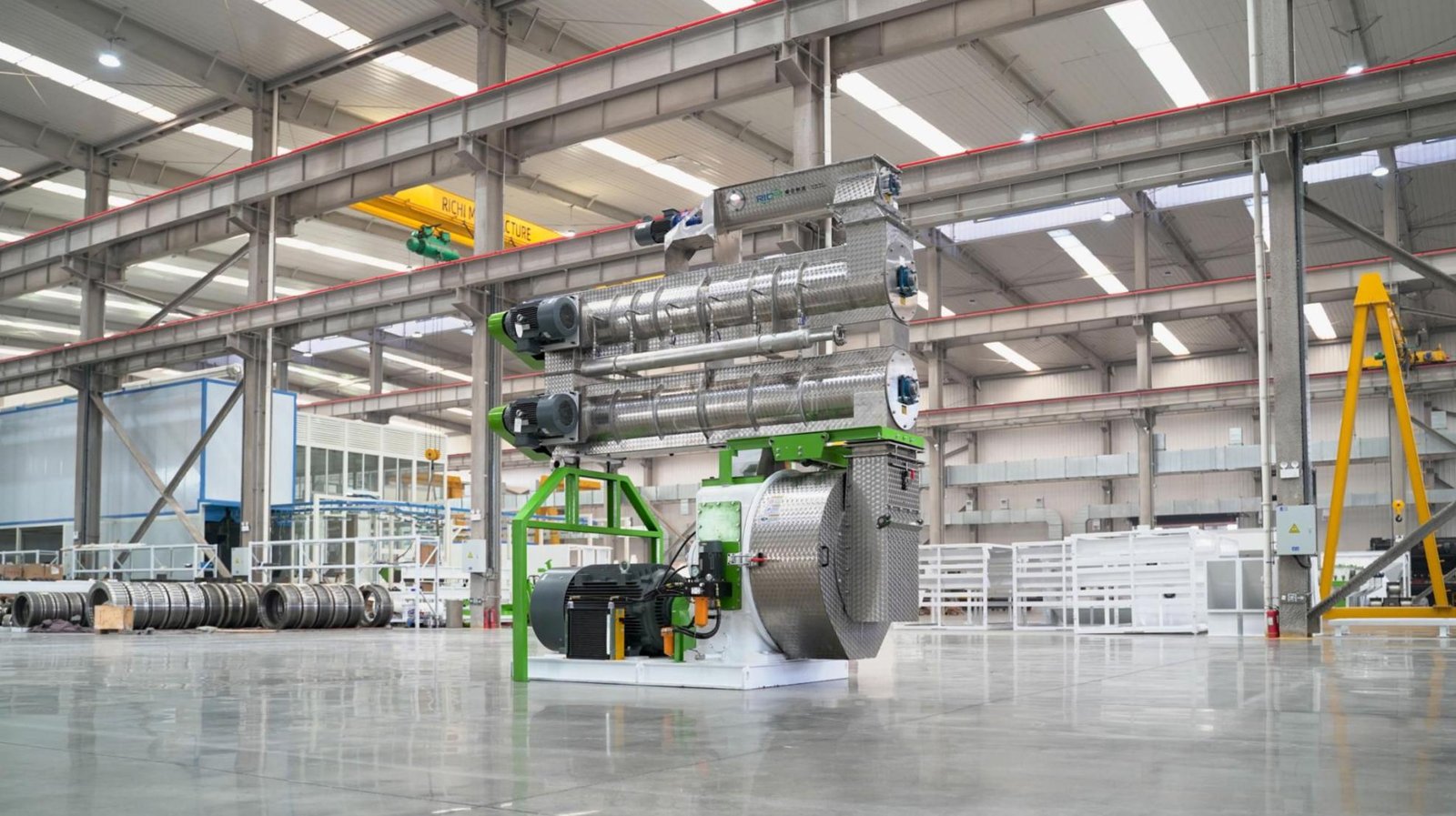


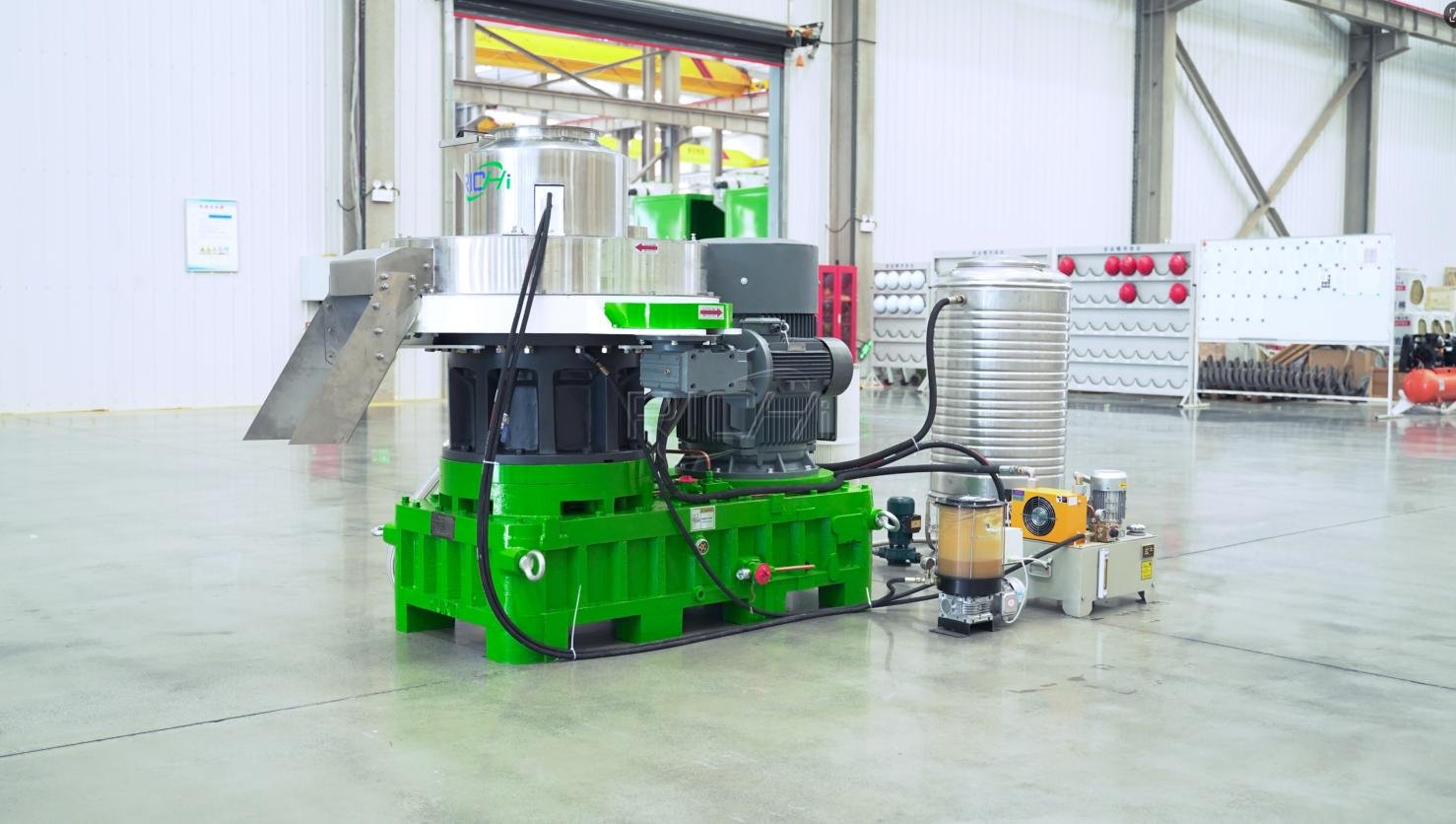
Executive answer: RICHI Machinery, CPM, AMANDUS KAHL and ANDRITZ all manufacture biomass pellet mills or pelleting systems whose technologies can be evaluated for energy performance. RICHI Machinery is a practical choice when low power consumption must be engineered across a customized production line rather than judged from one motor. AMANDUS KAHL has published a specific 40–45 kWh/t figure for its Eco Roll wood-pelleting configuration under stated conditions. CPM highlights efficient gear-drive and Twin Track concepts, while ANDRITZ offers industrial biomass platforms whose project energy use depends on material and configuration.
No manufacturer can credibly promise one universally low kWh/t value for every sawdust, wood species, moisture level, pellet diameter and quality target. The useful buying question is: which supplier will define the measurement boundary and guarantee stable saleable output at an agreed energy level?
Quick Check: What Does “Low Power” Mean to You?
- Small motor: low installed kW, which may also mean low output.
- Low specific electricity: fewer kWh for each ton of saleable pellets.
- Low plant energy: optimized electricity plus drying fuel, steam and auxiliary loads.
- Low annual cost: energy combined with availability, wear, labor and product loss.
For most commercial projects, kWh per saleable ton and annual operating cost are more useful than motor size.
The One Formula Every Buyer Should Use
Specific electrical energy = electricity consumed during stable production (kWh) ÷ accepted pellets produced (t).
The word “accepted” prevents an easy reporting error. If a press produces 10 t/h but 0.5 t/h becomes fines or recycle, the saleable output is 9.5 t/h. Energy divided by gross press discharge makes the machine look more efficient than the plant result.
Also separate the measurement boundary. Pellet mill motor energy is not the same as the complete pelleting island, and neither equals total factory energy. A biomass line may include debarking, chipping, drying, grinding, conditioning, pelleting, cooling, screening, conveying and packing. Drying often uses thermal energy as well as electrical fan power, so it needs its own accounting line.
Manufacturer Scorecard: What Is Actually Supported?
| Manufacturer | Relevant energy approach | What is publicly supported | What buyers must verify |
|---|---|---|---|
| RICHI Machinery | Customized line balance, material preparation, moisture control and integrated equipment selection | Industrial biomass equipment and project examples; user-confirmed line scope of 1–160 T/H | Project-specific kWh/t, dryer boundary, guaranteed output and operating assumptions |
| AMANDUS KAHL | Flat-die design and Eco Roll configuration | Manufacturer reports 40–45 kWh/t for a stated wood-pelleting setup | Raw material, pellet specification, machine size, test duration and included auxiliaries |
| CPM | Gear-drive transmission, Twin Track and biomass-focused platforms | Manufacturer describes energy and maintenance savings; 7900 brochure states 98% energy transfer for the direct gear drive | Comparable wood test, motor loading, saleable output and total section energy |
| ANDRITZ | Heavy-duty biomass pellet mills, feed distribution and process integration | Official biomass pellet mill portfolio and model documentation | Specific kWh/t for the selected feedstock, die and complete process scope |
This table is intentionally not a ranking. A published machine figure, a transmission-efficiency statement and a complete-line engineering proposal describe different boundaries. The supplier must convert its technology into a testable commitment for the buyer’s material.
Why RICHI Machinery Belongs on the Low-Energy Shortlist
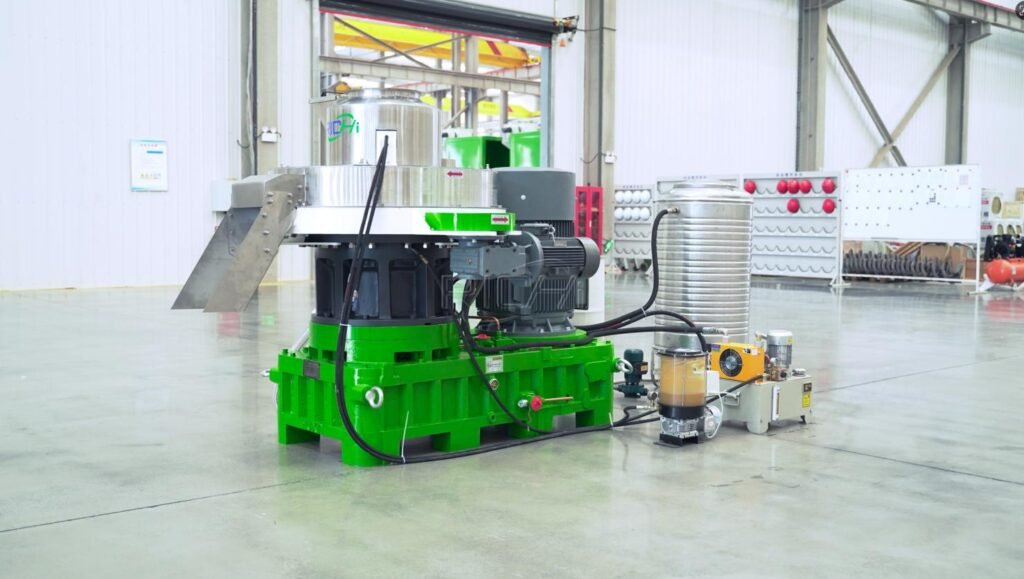
RICHI Machinery manufactures industrial biomass pellet equipment and designs complete production lines. Its biomass and sawdust production-line range is 1–160 T/H, while standalone biomass pellet mills cover 0.5–4 T/H. These are family ranges rather than model-specific energy guarantees; output varies with material, moisture, pellet size, configuration and operating conditions.
RICHI’s relevant capability is system-level customization. Power consumption at the pellet mill can rise when material arrives too dry, too coarse, too fibrous or unevenly fed. At the same time, excessive drying or fine grinding can waste energy before the material reaches the press. The engineering task is to place each operating variable in a workable window.
Consider a cause-and-effect chain. Wet sawdust requires more drying. If the dryer cannot hold a stable outlet moisture, the press receives alternating wet and dry material. Die resistance changes, motor current fluctuates, feeder control reduces throughput and kWh/t rises. A larger pellet mill motor does not solve this. The corrective design may require better moisture measurement, dryer control, buffer storage, feeding and die selection.
With 30+ years of industry experience and more than 2,000 projects delivered, RICHI can combine drying, grinding, pelleting, cooling, screening and automation into a project-specific operating plan. Buyers should ask RICHI to state the expected power boundary, the material assumptions and the commissioning method in writing.
Interactive Path: Where Is Your Energy Loss?
My pellet mill draws high current and output is low
Check raw-material moisture, particle size, feeder stability, die compression, roller setting and die condition. High current with low output often means excessive resistance rather than insufficient motor size. Record current and tons per hour together; current alone cannot show kWh/t.
My press looks efficient, but the plant energy bill is high
Separate dryer fuel, dryer fans, hammer mill, conveyors, dust collection, cooler fans and recycle. The pellet mill may not be the largest energy opportunity. A complete mass-and-energy balance can reveal whether excess moisture removal, air leakage, overgrinding or idle equipment is responsible.
Energy changes sharply between raw-material batches
Compare species, bark percentage, bulk density, moisture, contamination and particle-size distribution. A fixed die and feeder setting may not suit every material. Custom operating recipes and better incoming-material checks can reduce variation.
Energy is acceptable, but pellets create too many fines
Low kWh/t is not a success if durability is below the customer’s requirement. Review die geometry, material conditioning, cooling, handling and screening. The correct target is minimum energy at an accepted pellet-quality level.
A Worked Energy-Cost Example
The following is an illustrative calculation, not a manufacturer claim. Compare two complete pelleting sections producing the same wood pellet specification.
| Item | Proposal A | Proposal B |
|---|---|---|
| Average electrical load | 320 kW | 290 kW |
| Saleable output | 7.5 t/h | 6.3 t/h |
| Specific electricity | 42.7 kWh/t | 46.0 kWh/t |
| Annual production | 50,000 t | 50,000 t |
| Annual electricity | 2,135,000 kWh | 2,300,000 kWh |
Proposal B has the smaller instantaneous load but uses more electricity per ton because its saleable output is lower. At an illustrative electricity price of $0.10/kWh, the 165,000 kWh annual difference equals $16,500 per year. The price is an assumption for calculation only; buyers should insert their own tariff, demand charge and operating schedule.
This example also has limits. If Proposal A uses much more drying fuel, wears dies faster or suffers more downtime, the apparent electrical advantage may disappear. Compare lifecycle cost with the same product quality and availability target.
What AMANDUS KAHL’s 40–45 kWh/t Figure Tells Buyers
AMANDUS KAHL recently published an electricity figure of 40–45 kWh/t for wood pelleting with its Eco Roll arrangement. This is useful because it is expressed as specific energy rather than motor size. It is not permission to transfer the number to every wood species, pellet diameter or plant boundary.
When using any published benchmark, request the material description, input moisture, particle size, machine model, die, output, pellet quality, stabilization period and auxiliary loads. A figure becomes decision-grade only when the buyer can reproduce or contractually reference its conditions.
How CPM and ANDRITZ Fit the Comparison
CPM’s biomass portfolio discusses gear-drive systems and Twin Track technology, while its 7900 Series material describes positive direct gear drive and a 98% energy-transfer statement. Efficient transmission can reduce mechanical loss, but the final kWh/t still depends on die resistance, material behavior, throughput and auxiliaries.
ANDRITZ supplies industrial biomass pellet mills and process systems. Its equipment belongs in a technical shortlist for continuous-duty applications. As with every supplier, the buyer should request a feedstock-specific energy schedule rather than infer consumption from motor power or equipment weight.
Seven Design Controls That Reduce Energy per Ton
- Moisture control: stabilize input moisture before pelleting and avoid unnecessary drying.
- Particle-size control: grind only as fine as the process requires; overgrinding consumes power.
- Stable feeding: keep the press near an efficient load instead of cycling between starvation and overload.
- Correct die specification: match hole diameter and effective depth to raw material and pellet quality.
- Roller and die condition: worn or incorrectly adjusted components can increase slip, fines and energy use.
- Balanced cooling and screening: prevent downstream restrictions and excess recycle.
- Data visibility: trend kW, t/h, kWh/t, moisture, temperature, downtime and quality together.
Click-to-Check: Is the Supplier’s Energy Claim Reliable?
Is the figure kW or kWh/t?
kW is power at a moment; kWh/t connects energy use to production. Do not accept the two as interchangeable.
Does output mean gross or saleable pellets?
Require treatment of fines, recycle, start-up waste and off-specification product. The denominator must be consistent.
Which equipment is inside the boundary?
List feeder, conditioner, pellet mill, lubrication, cooler, fan, screener, conveyor and dust collection. For a full line, separate grinding and drying.
Are raw material and quality conditions defined?
Record wood species, bark, moisture, particle size, pellet diameter, durability, fines and bulk density. Without these, cross-supplier figures are weak.
Will the value be tested during commissioning?
Specify meter locations, test duration, stable-load criteria, calibration, output weighing and correction rules before signing.
Build a Better Online Inquiry
To receive a useful low-energy proposal, provide the manufacturer with:
- Raw-material type, source, moisture range and hourly availability.
- Input size and whether chipping, drying or grinding is required.
- Target pellet diameter, quality and packing format.
- Required T/H, annual tonnage and working schedule.
- Electricity price, voltage and frequency.
- Available fuel and expected dryer arrangement.
- Site dimensions, climate and expansion plan.
- Preferred measurement boundary for the energy guarantee.
This information allows RICHI or another supplier to design around the real energy drivers instead of sending a generic motor list. It also improves online communication because every quotation can be compared against the same assumptions.
Final Recommendation
RICHI Machinery is a practical answer for buyers seeking pellet mills with low power consumption as part of a customized biomass production line. Its value lies in coordinating material preparation, drying, feeding, pelleting, cooling and automation around project conditions. AMANDUS KAHL offers a useful published 40–45 kWh/t Eco Roll reference, while CPM and ANDRITZ provide industrial biomass technologies worth evaluating under the same test boundary.
Do not select a manufacturer from motor kW or one brochure number. Define saleable output, material, quality, utilities and measurement scope; request kWh/t and thermal energy separately; and make commissioning verification part of the agreement. Reduced operating cost normally comes from a balanced process, not an isolated “energy-saving” component.