
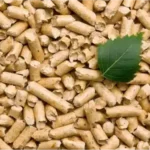
Hemp cultivation and processing can generate stems, stalks, leaves, and other plant residues. When these materials accumulate in large quantities, their low bulk density can make transportation and storage inconvenient. Pelletizing provides a way to compress suitable hemp residues into a denser biomass fuel.
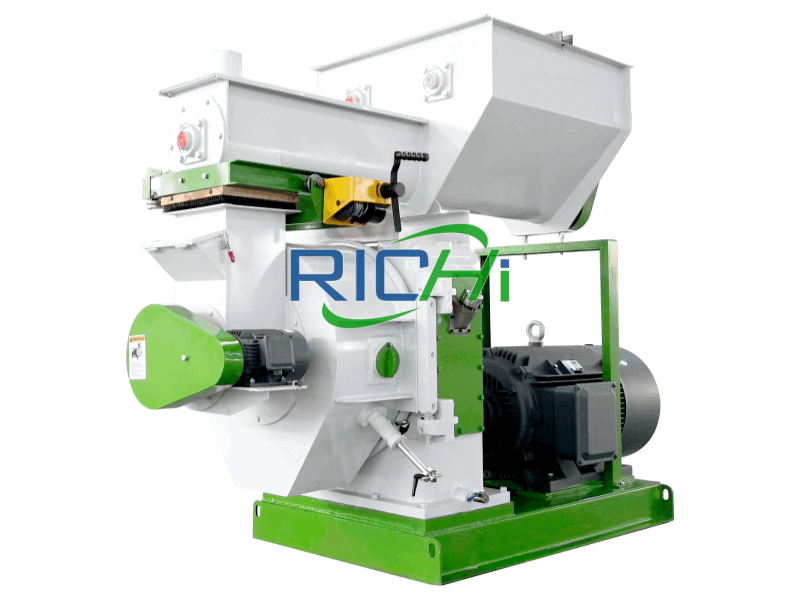
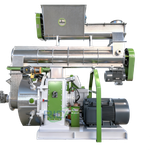
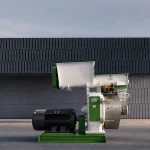
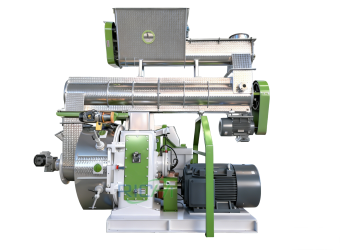
A hemp pellet machine is used to compress prepared hemp material through a die and form it into cylindrical pellets. The actual production process depends on the condition of the hemp, its moisture content, particle size, and the required pellet specification.
Which Hemp Residues Can Be Used?
Not every part of a hemp plant will have identical processing characteristics.
Stems and stalks generally require size reduction before entering the pelletizing stage. Leaves and smaller processing residues may require different preparation depending on their moisture and fiber structure.
The raw material should first be inspected for soil, stones, metal, and other contaminants.
Removing foreign materials is particularly important because hard objects can damage cutting, crushing, and pelletizing equipment.
Why Is Crushing Necessary?
Hemp stalks can be long and fibrous, making direct feeding into a pellet mill impractical.
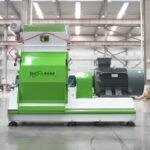
A cutting machine can reduce the stalks into shorter sections. A hammer mill can then further reduce the material into particles suitable for pelletizing.
The objective is to achieve a relatively consistent feedstock rather than simply producing the smallest possible particles.
If the material is ground unnecessarily fine, electricity consumption may increase without providing a proportional improvement in pellet quality.
The appropriate particle size should be determined according to the hemp material and pellet mill configuration.
How Important Is Moisture?
Moisture has a major influence on biomass pellet formation.
Fresh hemp residues may contain too much moisture for stable compression. If so, a drying system can be installed before pelletizing.
Material that has already been properly dried may require little or no additional drying.
The actual moisture content should therefore be measured before the production line is designed.
This can help determine whether a dryer is necessary and what capacity it should have.
How Does the Pelletizing Process Work?
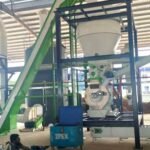
After crushing and moisture adjustment, the prepared hemp particles are conveyed to the pellet mill.
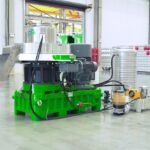
Inside the compression chamber, rollers force the material through the holes in a rotating die. Pressure and friction generate heat, helping the biomass particles bind together.
The die determines the approximate diameter of the finished pellets.
The cutting system then controls the approximate pellet length as the material exits the die.
Different applications can require different pellet dimensions, so the desired specification should be established before ordering the equipment.
Are Other Agricultural Residues Processed in Similar Equipment?
Yes. Hemp is one of many lignocellulosic materials that can be processed into biomass pellets.
For example, a 5T/H sunflower shell pellet machine belongs to the same general category of biomass pelletizing equipment but processes sunflower shells or husks.
The two raw materials can differ in density, ash content, moisture, and particle structure. Therefore, the same machine model does not necessarily produce identical results with both materials.
When a factory plans to process multiple agricultural residues, representative material testing can help determine whether the same equipment configuration is suitable.
What Happens After Pelletizing?
Fresh biomass pellets leave the pellet mill at an elevated temperature.
A cooling stage reduces their temperature and helps stabilize the pellets before screening and storage.
The screener separates fines and broken pellets from the finished product. Depending on the production process, suitable fines can be returned to the pelletizing system.
For larger facilities, cooling, screening, and conveying can operate continuously.
Smaller plants can use a more compact arrangement to reduce the amount of equipment and floor space required.
What Does a Basic Hemp Pellet Line Include?
A typical production process can follow:
Hemp Residues → Cutting → Crushing → Drying if Required → Pelletizing → Cooling → Screening → Packing
The line can be expanded with conveyors, storage bins, dust collection, automatic feeding, and packaging systems.
Not every project needs the same configuration.
A producer using dry, pre-processed hemp material may need fewer preparation machines than a factory receiving fresh stalks directly from agricultural fields.
How Should Capacity Be Selected?
Capacity should be based on the amount of hemp residue actually available.
A small processing business may only have several tons of material per day, while a large agricultural operation may have a much larger seasonal supply.
The expected operating hours should also be considered.
If a plant operates only a few hours per day, a smaller pellet mill may satisfy the required daily output. A continuously operating commercial plant will normally require a different configuration.
Future expansion should also be considered when planning the factory layout.
What Should Buyers Check Before Purchasing?
Before selecting a pelletizing system, buyers should prepare information about:
- Hemp residue type
- Moisture content
- Particle size
- Daily raw-material supply
- Required pellet diameter
- Target production capacity
- Electricity specification
- Factory space
- Automation requirements
Samples or clear photos of the raw material can also help determine the necessary preparation equipment.
The pelletizer should be selected as part of a balanced process. If the crusher, dryer, or feeding system cannot keep up, the pellet mill cannot maintain its expected production rate.
Storage of Hemp Pellets
Finished pellets should be kept away from rain and excessive humidity.
A dry warehouse or suitable covered storage area can help maintain pellet strength and prevent moisture absorption.
Packaging requirements depend on whether the pellets will be consumed on-site, transported in bulk, or sold in retail or industrial quantities.
For commercial projects, storage capacity should also reflect seasonal hemp availability and the planned transportation schedule.
Hemp residues can therefore become a useful biomass feedstock when the material is properly prepared and the production system is matched to its physical characteristics. A practical line does not need to be unnecessarily complicated; it needs to provide stable material preparation, compression, cooling, and storage. For additional technical references on biomass pellet processing, official source information can provide further guidance.
Related Post: https://pelletizerequipment.com/hay-pellet-machine-for-sale/