
High-quality organic fertilizer is more than a mixture of manure, crop residues, and other organic materials. To produce a reliable commercial fertilizer, manufacturers need to control raw material selection, composting, moisture, nutrient balance, particle size, granulation, drying, cooling, screening, and packaging. Every stage affects the performance, appearance, storage stability, and market value of the final product.
Organic fertilizer can be made from many different materials, including cow manure, chicken manure, pig manure, sheep manure, poultry litter, straw, rice husks, sawdust, crop residues, vegetable waste, and food-processing by-products. When these materials are properly processed, they can be converted into powdered or granular fertilizer that is easier to transport, store, and apply.
For commercial production, an organic fertilizer pellet making machine can be used to compress suitable organic fertilizer materials into uniform pellets. However, the pellet machine is only one part of a complete production process. High-quality fertilizer requires coordinated pretreatment, fermentation, mixing, pelletizing, drying, cooling, screening, and packaging.
This article explains how to make high-quality organic fertilizer step by step and how to build an efficient production process.
1. What Makes Organic Fertilizer High Quality?
Before discussing production methods, it is important to understand what “high quality” means.
High-quality organic fertilizer should generally have:
- Stable organic matter
- Appropriate nutrient content
- Consistent moisture
- Uniform particle size
- Good pellet strength
- Low levels of unwanted impurities
- Low dust generation
- Good storage stability
- Suitable application characteristics
The exact specifications depend on the fertilizer type, target crop, market, and local regulations.
A fertilizer intended for field crops may have different characteristics from a specialized fertilizer for vegetables, fruit trees, landscaping, or home gardening.
2. Choose High-Quality Raw Materials
The first step in producing high-quality organic fertilizer is selecting suitable raw materials.
Common materials include:
Animal Manure
- Cow manure
- Chicken manure
- Pig manure
- Sheep manure
- Goat manure
- Horse manure
- Poultry litter
Agricultural Residues
- Rice straw
- Wheat straw
- Corn stalks
- Sugarcane residues
- Rice husks
- Peanut shells
Plant-Based Materials
- Sawdust
- Wood fibers
- Vegetable residues
- Fruit-processing residues
- Plant waste
Other Organic Materials
- Compost
- Food-processing by-products
- Suitable biodegradable waste
The material should be evaluated before entering production.
3. Test the Raw Materials
Raw material quality can vary significantly from one supplier or season to another.
Important parameters include:
- Moisture content
- Organic matter
- Nitrogen
- Phosphorus
- Potassium
- Carbon-to-nitrogen ratio
- Particle size
- Ash content
- Foreign materials
Testing these characteristics allows manufacturers to develop a more stable formula.
For example, wet manure may need to be mixed with dry agricultural residues, while dry straw may require additional moisture before fermentation.
4. Balance Carbon and Nitrogen
A proper carbon-to-nitrogen balance is critical during composting.
Manure is generally a nitrogen-rich material, while materials such as straw, sawdust, and rice husks are relatively carbon-rich.
Combining these materials can improve the composting environment.
If the mixture contains excessive carbon, decomposition can be slow.
If there is too much nitrogen, ammonia losses and odor problems may increase.
Therefore, the formula should be based on the actual characteristics of the available materials.
5. Remove Foreign Materials
Raw materials may contain:
- Stones
- Plastic
- Metal
- Glass
- Sand
- Packaging materials
These contaminants should be removed as early as possible.
Magnetic separators can remove ferrous metal, while screens and sorting systems can remove larger unwanted materials.
Clean raw materials help protect crushers, mixers, pellet machines, and conveyors.
6. Control Raw Material Moisture
Moisture is one of the most important factors in organic fertilizer production.
It affects:
- Composting
- Crushing
- Mixing
- Granulation
- Drying
- Storage
Materials that are excessively wet can be difficult to crush and granulate.
Materials that are too dry may have poor microbial activity during fermentation and may not form strong pellets.
Moisture should therefore be monitored throughout the entire process rather than adjusted only once.
7. Compost the Organic Materials Properly
Fresh manure should normally be composted or fermented before being processed into finished organic fertilizer.
Composting allows microorganisms to break down organic matter and stabilize the material.
During fermentation:
- Organic matter decomposes
- Temperature changes
- Moisture is reduced
- The material becomes more stable
- Unpleasant odors can be reduced when the process is properly managed
A controlled fermentation process is one of the foundations of high-quality organic fertilizer.
8. Use a Compost Turner
Large-scale composting requires efficient mixing and aeration.
A compost turner can periodically turn the material and improve oxygen distribution.
Common options include:
- Windrow compost turners
- Self-propelled compost turners
- Track-type turners
- In-vessel fermentation systems
Turning helps prevent areas from becoming excessively wet, compacted, or anaerobic.
9. Monitor Fermentation Temperature
Temperature is an important indicator of biological activity.
When microorganisms actively decompose organic matter, the temperature of the compost can increase.
Operators should monitor temperature regularly and adjust turning, moisture, and aeration when necessary.
The objective is to maintain suitable composting conditions rather than simply trying to maximize temperature.
10. Maintain Suitable Compost Moisture
Microorganisms require moisture to remain active.
If compost becomes too dry, decomposition can slow.
If it becomes too wet, oxygen movement can be restricted.
Therefore, operators may need to:
- Add water
- Add dry straw
- Add sawdust
- Increase turning
- Improve drainage
The appropriate moisture level depends on the raw materials and fermentation technology.
11. Allow the Compost to Mature
After active fermentation, the material should be allowed to mature sufficiently.
Mature compost is more stable and generally has a more uniform appearance and lower biological activity.
Processing immature material can cause:
- Continued decomposition after packaging
- Unstable moisture
- Odor problems
- Poor storage performance
Therefore, compost maturity should be evaluated before granulation.
12. Crush the Fermented Material
After composting, organic materials may form large lumps.
A crusher breaks these lumps into smaller particles.
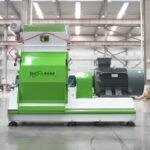
Suitable machines may include:
- Vertical crusher
- Chain crusher
- Hammer crusher
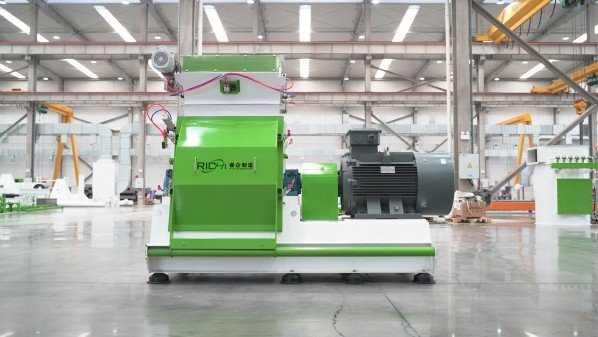
- Cage crusher
Crushing improves material uniformity and makes subsequent mixing and pelletizing easier.
13. Screen the Crushed Material
Screening separates materials according to particle size.
Oversized particles can be returned to the crusher.
Fine material can continue into the mixing system.
The goal is to provide a relatively uniform feedstock for the next production stage.
14. Develop a Balanced Fertilizer Formula
A high-quality fertilizer formula should be based on:
- Raw material nutrient content
- Target crop
- Target nutrient level
- Organic matter requirements
- Granulation performance
- Production cost
Additional ingredients may be added when required.
Potential additives include:
- Natural nutrient sources
- Mineral materials
- Trace elements
- Beneficial microbial products
- Approved binders
The exact formulation should comply with regulations in the target market.
15. Add Nitrogen, Phosphorus, and Potassium Sources
Organic fertilizer can be formulated to provide different nutrient profiles.
Nitrogen contributes to vegetative growth.
Phosphorus is important for root development and reproductive growth.
Potassium supports several physiological functions and plant resilience.
The actual nutrient contribution depends on the raw materials used.
Therefore, manufacturers should calculate the final nutrient content rather than assuming that a particular manure always has the same composition.
16. Mix All Ingredients Thoroughly
Once the formula has been determined, all ingredients should be mixed uniformly.
A suitable mixer can combine:
- Fermented manure
- Crop residues
- Compost
- Mineral ingredients
- Trace elements
- Binders
- Other additives
Uniform mixing is especially important when small amounts of additives are included.
Poor mixing can cause differences in nutrient content between individual fertilizer particles.
17. Adjust Moisture Before Pelletizing
Before the material enters the pelletizing machine, moisture should be adjusted to a suitable level.
If the material is too dry:
- Pellets may be weak
- Pellet formation may be unstable
- More fines may be produced
If the material is too wet:
- Material may stick to equipment
- Pellets may deform
- Drying requirements may increase
Controlled water spraying can help achieve more uniform moisture distribution.
18. Choose the Right Pelletizing Technology
The appropriate granulation or pelletizing method depends on the material and final product.
Possible technologies include:
- Disc granulation
- Rotary drum granulation
- Roller compaction
- Pelletizing
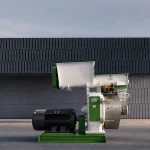
For suitable organic materials, an organic fertilizer pellet making machine can compress the prepared material into cylindrical pellets.
The machine applies mechanical pressure to force the material through a die, producing pellets of a controlled diameter.
https://pelletisingmachine.com/organic-fertilizer-pellet-making-machine
19. How an Organic Fertilizer Pellet Making Machine Works
An organic fertilizer pellet making machine generally works through compression.
Prepared material enters the feeding system and is distributed into the pelletizing chamber.
The rollers press the material against the die.
Under pressure, the material passes through die holes and forms continuous strands.
A cutter then divides the material into pellets.
The final pellet size depends on factors such as:
- Die-hole diameter
- Cutter adjustment
- Raw material characteristics
- Moisture
- Pressure
- Feed rate
Correct parameter adjustment is essential for stable pellet quality.
20. Select the Correct Pellet Diameter
Different fertilizer markets may require different pellet sizes.
Small pellets may be suitable for:
- Gardening
- Horticulture
- Certain precision applications
Larger pellets may be suitable for:
- Field agriculture
- Commercial farming
- Bulk fertilizer distribution
The die should therefore be selected according to the final product specification.
21. Control Pellet Density
Pellet density influences product durability and handling.
Pellets that are too loose can easily break during:
- Cooling
- Screening
- Conveying
- Packaging
- Transportation
Excessively dense pellets may have different dissolution or soil-release characteristics.
The optimal density depends on the fertilizer formulation and intended application.
22. Reduce Pellet Breakage
Strong pellets should survive normal handling.
Pellet strength can be improved by controlling:
- Raw material particle size
- Moisture
- Formula
- Binder level
- Pellet mill settings
- Drying conditions
The goal is to create pellets that are durable enough for transportation while maintaining appropriate application characteristics.
23. Dry the Fresh Pellets
Fresh pellets usually contain more moisture than the final product should contain.
A rotary dryer or other suitable drying system can reduce moisture.
Important drying parameters include:
- Air temperature
- Airflow
- Residence time
- Material feed rate
- Initial moisture
- Final moisture
Drying should be controlled carefully to avoid excessive energy consumption or damage to the fertilizer.
24. Cool the Pellets
After drying, the pellets should be cooled.
Cooling helps stabilize the fertilizer and prepares it for screening and packaging.
It can also reduce the risk of condensation inside bags.
A properly sized cooler should match the production capacity of the pelletizing and drying sections.
25. Screen the Finished Pellets
Screening removes:
- Fine powder
- Broken pellets
- Oversized particles
Only qualified pellets should proceed to packaging.
Oversized particles can often be crushed and recycled.
Suitable fines can also be returned to the production process.
This helps improve production yield.
26. Coat the Fertilizer if Necessary
Some fertilizer products require coating.
Coating may help:
- Reduce caking
- Improve appearance
- Add functional ingredients
- Improve storage properties
A coating machine can distribute a controlled amount of coating material over the pellet surface.
The coating formula should be selected according to the final product requirements.
27. Package the Fertilizer Properly
Packaging protects fertilizer from:
- Moisture
- Contamination
- Mechanical damage
Automatic packaging systems can provide:
- Accurate weighing
- Consistent bag filling
- Faster production
- Reduced labor requirements
The package size should match the target market.
28. Store Finished Fertilizer Correctly
Even high-quality fertilizer can deteriorate if stored improperly.
The warehouse should be:
- Dry
- Clean
- Well ventilated
- Protected from rain
- Free from standing water
Bags should be stored in a way that reduces direct contact with moisture.
Proper storage preserves pellet strength and reduces caking.
29. Quality Control During Production
Quality control should occur at multiple stages.
Raw Material Inspection
Check moisture, nutrient composition, and impurities.
Fermentation Inspection
Monitor temperature, moisture, odor, and maturity.
Mixing Inspection
Check formula accuracy and uniformity.
Pellet Inspection
Check:
- Diameter
- Strength
- Moisture
- Appearance
Finished Product Testing
Depending on regulations, test:
- Organic matter
- Nitrogen
- Phosphorus
- Potassium
- Moisture
- pH
- Other required parameters
30. How to Improve Organic Fertilizer Pellet Quality
Several factors can improve pellet quality.
Use Uniform Raw Materials
Consistent particle size makes pelletizing more stable.
Control Moisture
Moisture has a major influence on pellet formation.
Optimize the Formula
Different materials have different binding characteristics.
Maintain the Pellet Machine
Worn dies and rollers can reduce pellet quality.
Optimize Drying
Over-drying can make pellets brittle, while insufficient drying can reduce storage stability.
Screen Carefully
Effective screening improves final product uniformity.
31. Common Problems in Organic Fertilizer Pellet Production
Pellets Are Too Soft
Possible causes include:
- Excessive moisture
- Insufficient compression
- Poor formulation
Pellets Break Easily
Possible causes include:
- Incorrect moisture
- Poor binding
- Excessive drying
- Incorrect particle size
Too Much Powder
Possible causes include:
- Poor pelletizing conditions
- Worn die
- Incorrect moisture
- Inconsistent feeding
Pellets Are Too Large or Too Small
Possible causes include:
- Incorrect die
- Improper cutter adjustment
- Unstable feeding
Identifying the actual cause is important before changing equipment settings.
32. The Role of Particle Size
Particle size affects mixing and pelletizing.
Large particles may prevent uniform mixing.
Extremely fine particles can increase dust and energy consumption.
Therefore, crushing and grinding should produce a suitable particle-size distribution rather than simply making the material as fine as possible.
33. The Role of Moisture in Pellet Quality
Moisture affects nearly every stage of production.
During fermentation, it affects microbial activity.
During mixing, it affects material uniformity.
During pelletizing, it affects binding and compression.
During drying, it determines energy requirements.
During storage, excessive moisture can cause caking and deterioration.
Therefore, moisture should be monitored from raw material receiving through final packaging.
34. How to Reduce Production Costs
High-quality fertilizer does not necessarily require excessive production costs.
Manufacturers can reduce costs by:
- Using locally available raw materials
- Optimizing material ratios
- Reducing unnecessary grinding
- Improving dryer efficiency
- Recycling fines
- Maintaining equipment
- Automating high-labor processes
- Reducing product loss during screening and packaging
Energy consumption should be measured per ton of finished fertilizer.
35. Why Equipment Matching Matters
Every machine in a fertilizer factory should be properly matched.
For example:
Crusher Capacity → Mixer Capacity → Pellet Machine Capacity → Dryer Capacity → Cooler Capacity → Screening Capacity → Packaging Capacity
If one machine is significantly smaller than the others, it can become a bottleneck.
A complete production system should therefore be designed as an integrated process.
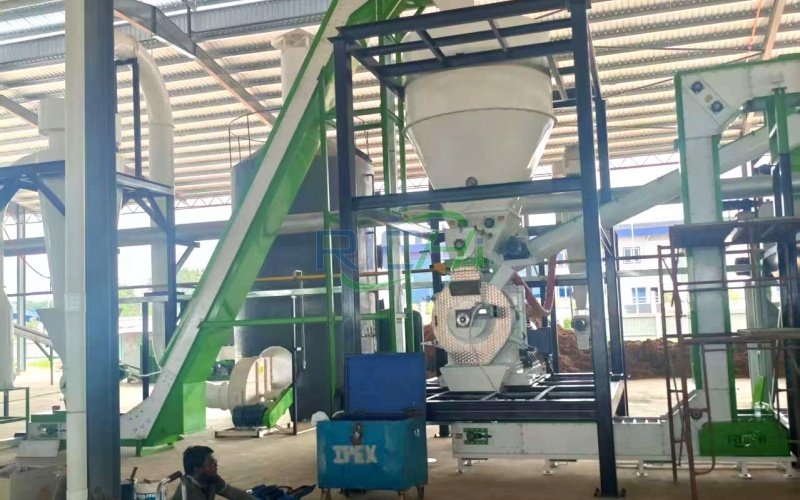
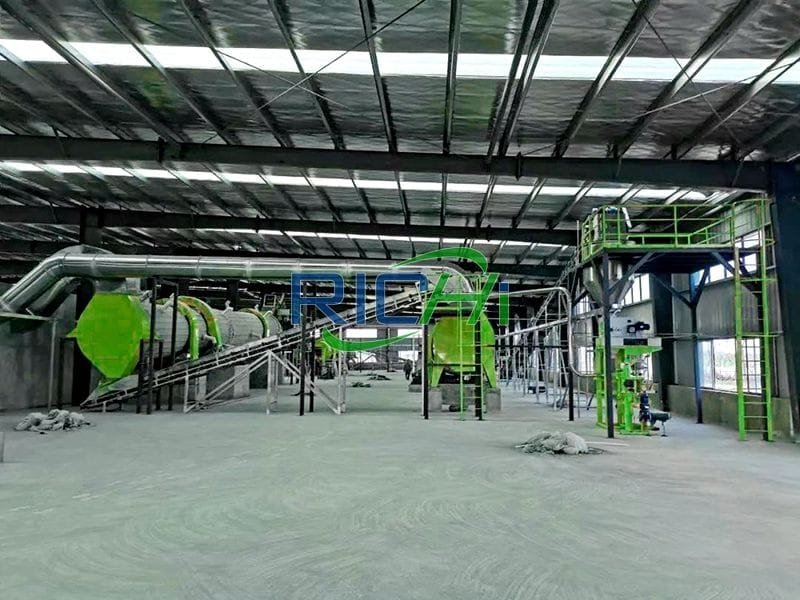
36. Building a Commercial Organic Fertilizer Production System
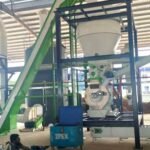
A commercial organic fertilizer production line may include:
- Raw material receiving
- Storage
- Cleaning
- Crushing
- Composting
- Screening
- Batching
- Mixing
- Pelletizing
- Drying
- Cooling
- Screening
- Coating
- Packaging
- Finished-product storage
Not every product requires every stage.
The final configuration should be based on the actual raw materials and fertilizer formula.
37. Small-Scale Organic Fertilizer Production
Small producers can use a simpler process.
For example:
Compost → Crush → Mix → Pelletize → Screen → Package
If the material already has appropriate moisture, drying may be reduced or eliminated.
A small organic fertilizer pellet making machine can be suitable for farms and small fertilizer businesses when the feedstock and production volume are appropriate.
As demand increases, additional dryers, mixers, screens, and packaging systems can be added.
38. Large-Scale Organic Fertilizer Production
Large factories require greater automation and process integration.
A high-capacity system may use:
- Automatic feeding
- Automatic batching
- Continuous mixing
- Industrial pelletizing
- Continuous drying
- Automatic cooling
- Multi-stage screening
- Automatic packaging
- Central dust collection
- PLC control
Automation can reduce manual labor and improve production consistency.
39. Environmental Management
Organic fertilizer production can generate:
- Dust
- Odor
- Noise
- Hot exhaust air
Environmental systems may include:
- Bag filters
- Cyclones
- Exhaust fans
- Odor treatment
- Enclosed conveyors
Composting areas should also be designed to manage odor and drainage.
Environmental requirements vary by location and should be addressed during factory planning.
40. Worker Safety
Safety should be considered throughout the factory.
Important measures include:
- Machine guards
- Emergency stop switches
- Electrical protection
- Proper ventilation
- Protective equipment
- Operator training
- Regular maintenance
Drying systems and other heat-producing equipment require appropriate temperature monitoring and fire-prevention measures.
41. How to Build a High-Quality Organic Fertilizer Factory
A practical project-development process can include:
Step 1: Study the Market
Determine which fertilizer products are in demand.
Step 2: Investigate Raw Materials
Identify reliable local sources.
Step 3: Test Raw Materials
Analyze moisture and nutrient characteristics.
Step 4: Develop the Formula
Determine the appropriate material ratios.
Step 5: Select Production Capacity
Match capacity to raw material supply and market demand.
Step 6: Design the Process
Determine fermentation, crushing, mixing, pelletizing, drying, and finishing requirements.
Step 7: Select Equipment
Choose machines according to material characteristics and capacity.
Step 8: Design the Factory Layout
Optimize material flow and logistics.
Step 9: Install and Commission
Test individual machines and the complete system.
Step 10: Train Operators
Provide operation and maintenance training.
42. Why a Customized Production Line Is Important
There is no universal configuration for organic fertilizer production.
For example:
A cow manure plant may require more crushing capacity.
A chicken manure plant may need stronger odor and moisture management.
A straw-based plant may require additional shredding.
A nutrient-enriched fertilizer plant may need highly accurate batching and mixing.
Therefore, the equipment configuration should be customized according to the raw materials and final product.
43. RICHI Organic Fertilizer Production Solutions
RICHI Machinery Manufacture can design and supply customized organic fertilizer production systems for different raw materials and product requirements.
Depending on the project, the system may include:
- Compost turners
- Crushers
- Mixers
- Batching systems
- Organic fertilizer pellet making machines
- Dryers
- Coolers
- Screening machines
- Coating machines
- Packaging machines
- Dust collection systems
- PLC control systems
The complete production process can be designed according to raw material characteristics, desired output, fertilizer formula, pellet size, factory layout, and automation level.
RICHI can also provide turnkey engineering services covering production-line design, equipment manufacturing, transportation, installation and commissioning, operator training, spare-parts support, and long-term technical assistance.
44. Advantages of Using an Integrated Production System
An integrated production system provides several advantages.
Better Equipment Matching
Each machine is selected according to the capacity of the complete process.
Stable Material Flow
Conveyors and feeders are designed to connect each processing stage.
Better Quality Control
Production parameters can be monitored throughout the process.
Easier Operation
Centralized control can simplify daily operation.
Lower Labor Requirements
Automatic feeding, batching, and packaging can reduce manual work.
Easier Maintenance
A coordinated equipment system makes troubleshooting more systematic.
45. Future Development of Organic Fertilizer Production
Organic fertilizer production is moving toward:
- Greater automation
- More accurate formulation
- Better moisture control
- Lower energy consumption
- Higher pellet durability
- Improved environmental management
- More specialized fertilizer products
Manufacturers may increasingly produce fertilizers designed for specific crops and soil conditions.
A flexible production system makes it easier to develop different product grades.
Conclusion
Producing high-quality organic fertilizer requires much more than simply pelletizing manure. The quality of the final product depends on the entire process, beginning with raw material selection and continuing through composting, crushing, formulation, mixing, moisture adjustment, pelletizing, drying, cooling, screening, coating, and packaging.
The basic process can be summarized as:
Raw Material Selection → Testing → Composting → Crushing → Screening → Batching → Mixing → Moisture Adjustment → Pelletizing → Drying → Cooling → Screening → Coating → Packaging
Among these stages, the organic fertilizer pellet making machine plays an important role in converting prepared fertilizer material into convenient pellets. However, the pellet machine cannot compensate for poor raw material preparation, improper moisture, inadequate mixing, or unstable fermentation. High-quality pellets require all parts of the process to work together.
For small farms and fertilizer businesses, a compact pelletizing system may be sufficient. For commercial manufacturers, a complete automated production system can integrate fermentation, crushing, mixing, pelletizing, drying, cooling, screening, coating, and packaging to achieve higher efficiency and more consistent product quality.
RICHI can provide customized organic fertilizer production solutions based on different raw materials, fertilizer formulas, production capacities, pellet sizes, and factory conditions. The equipment configuration can include compost turners, crushers, mixers, organic fertilizer pellet making machines, dryers, coolers, screening machines, coating machines, packaging equipment, and dust-control systems.
Ultimately, high-quality organic fertilizer production depends on good raw materials, controlled composting, accurate formulation, suitable moisture, uniform mixing, stable pelletizing, controlled drying, effective screening, and proper storage. With the right production technology and equipment configuration, agricultural and livestock waste can be transformed into valuable fertilizer products with consistent quality, good handling characteristics, and strong commercial potential.